
Learning how to restore a cast iron skillet will save money and keep your cast iron going for generations. Master the art of cast iron cooking today!

This post contains affiliate links which means I make a small commission at no extra cost to you. See my full disclosure here.
Discovering the versatility and durability of cast iron cookware has been a game-changer in my kitchen. Cooking with cast iron offers numerous advantages including its health benefits compared to other non-stick options. Its ability to withstand high temperatures makes it ideal for a variety of cooking methods, from stovetop to campfire. Moreover, with proper care, cast iron cookware can last for generations, becoming a staple in the kitchen.
In my journey with cast iron, I learned how to bring a forgotten and rusty cast iron pan back to life. I want to share this restoration process with you, so you can experience the joy of cooking with a well-seasoned cast iron skillet. Along with that, I’ll highlight why cooking with cast iron is wonderful and provide some essential tips for those who are new to using this incredible material.

Key Takeaways
- Restoring cast iron pans extends their life and enhances non-stick properties.
- Regular use of cast iron cookware improves its cooking performance.
- Cast iron is ideal for various heat sources and adds flavor to dishes.

Advantages of Using Cast Iron for Cooking
Cooking with cast iron has transformed my kitchen routine. I’ve discovered its superiority over other non-stick cookware due to its health benefits and durability. One quality I truly appreciate is its ability to withstand high temperatures, making it ideal for an open flame. Learning how to restore a cast iron skillet, will enable you to keep these pans going for a long time. These pans not only last for decades but often become family heirlooms passed down through generations.
Here are the top five aspects that make cast iron cookware a staple in my home:
- Better Tasting Food: Meals prepared in cast iron, from frying chicken to roasting vegetables, have a noticeable improvement in flavor and crispiness.
- Ease of Cooking: Despite a learning curve, once familiar with cast iron, it becomes more convenient to use than many other types of pans.
- Non-Stick without Chemicals: Cast iron provides a natural non-stick surface which improves with use, making it a healthier choice over pans with synthetic coatings.
- Exceptional Durability: The robust nature of cast iron ensures it can stand the test of time and even be handed down through generations.
- Versatile Cooking Options: From stovetops to campfires, cast iron is adaptable to almost any heat source, an invaluable feature, especially during power outages for those living a homesteader lifestyle.

In my own experience, the initial hesitation toward cast iron based on misconceptions about its maintenance and use was quickly dispelled. Regular use and proper seasoning have made my pans increasingly non-stick and a joy to cook with every day.
Path to Cast Iron Mastery
As a homesteader deeply invested in traditional cooking methods, I’ve become an advocate for the use of cast iron cookware. My voyage into the world of cast iron started with a quest for a new pancake griddle, straying away from common non-stick coatings for health reasons. My husband and I prioritized longevity in our kitchenware, favoring stainless steel pans since our marriage in 2011. This mindset naturally carried over in my search, leading me to a pre-seasoned Lodge cast iron pancake griddle.

Supplies You’ll Need to Restore a Cast Iron Skillet
- An old cast iron pan
- Scrubbing device such as a sponge with an abrasive backing or steel wool
- Absorbent towel
- Dish Soap
- Vegetable oil
- Baking soda and vinegar (for really tough rust stains!)
- An oven!
How to Restore a Cast Iron Skillet
- Rinse cast iron skillet to remove any loose particles.
- Scrub skillet with warm water and a tough scrubber, like steel wool, to eradicate any rust.
- For stubborn rust, soak rusted areas with white vinegar for an hour, then scrub with baking soda and rinse.
- Post-scrubbing and rinsing towel dry the pan.
- Look closely at the pan to see if there is a rust remaining. Having a dry pan helps with this. If there is still rust, go in for another round of scrubbing!
- Once all the rust is removed, further dry on a stove top on medium-low heat.
- Once dry and rust-free, coat the skillet with vegetable oil using an old rag or paper towel.

How to Season a Cast Iron Skillet
- Preheat your oven to 350° F.
- Apply a generous layer of vegetable oil over the entire pan, inside and out.
- Place the pan upside down on a cookie sheet in the oven to catch any drips.
- Bake the skillet for 1 hour and leave it in the oven until both are cool.
Why Cast Iron Reigns Supreme
Reasons cast iron cookware is a homesteader’s delight:
- Flavor Enhancement: It imbues food with a distinctly crisp and rich taste.
- Ease of Use: Once familiar, it’s straightforward to cook with compared to many alternatives.
- Naturally Non-stick: Regular use builds a natural, safe non-stick surface.
- Durability: These pans are sturdy, capable of lasting generations.
- Versatility: Suitable for various heating environments – stovetops, open flames, BBQs, and even pizza ovens.

Tips for the Cast Iron Novice
Despite initial setbacks during my first attempt, I found that regular use led to effortless cooking experiences. Cast iron, although heavier than other pans, promises a non-stick surface that improves with each use. It does require a distinct approach, but mastering it means ensuring delicious food even during power outages or when cooking over a campfire.
Revitalizing Your Underused Cast Iron Cookware
Essential Items for Cast Iron Renewal
To start mending your cast iron cookware, you’ll need a few items:
- A piece of cast iron that has seen better days
- Abrasive tools like steel wool, robust sponges, or scrub brushes
- Mild dish detergent
- A highly absorbent towel
- Vegetable oil, preferable to use
- An oven for the seasoning process
Starting with a Thorough Scrub
Begin by rinsing your skillet to remove any superficial dirt or debris. For pans in poor shape, warm up some water, immerse the pan, and start scrubbing to dislodge stubborn rust or gunk. After the initial scrub, a soaked pan and a touch of dish soap coupled with steel wool can work wonders in peeling away the rust. Rinse well and dry thoroughly with a towel.
Tactics for Rust Eradication
If rust persists, a targeted approach with steel wool on the heavily affected areas may be necessary. For deeply embedded rust, a treatment with white vinegar can help. Let the vinegar rest on the rust for about an hour before scrubbing again. Rinse and dry, then check for remaining rust.
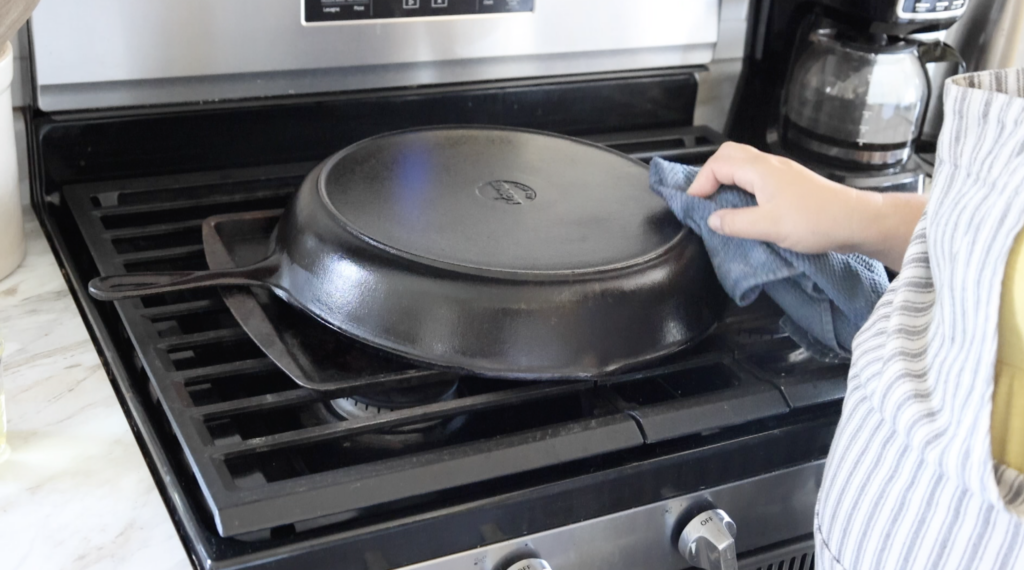
Ensuring Dryness and Rust Assessment
After drying the pan with a towel, I heat it on a stove at medium-low to evaporate any lingering moisture, ensuring the pan is arid. This step often makes remaining rust spots more visible, facilitating targeted cleaning.
Persist in Removing Residual Rust
Should you encounter persistent rust, repeat the cleaning process—scrubbing and drying—until the cast iron returns to a uniform, matte black appearance, free of any rust.
The Seasoning Method
For seasoning, preheat your oven to 350°F (175°C). With the pan bone-dry, coat every inch of it in vegetable oil using a rag or paper towel. I then place the cast iron upside down on a baking sheet to catch drips and bake it for one hour. Once the oven cools, your pan will emerge, boasting a slick, non-stick surface. The seasoning enhances with each use, further improving the non-stick quality.
Key Attributes of Cast Iron Cookware
Amplifies Flavor Profile
Cast iron cookware has a profound impact on enhancing the taste of various dishes, from frying chicken to roasting vegetables. The material’s heat distribution properties contribute to a crispier, more savory outcome, effectively boosting the culinary experience.
User-Friendly Experience
Despite some initial challenges, using cast iron becomes quite straightforward with a bit of practice. With its simple maintenance and cooking process, it offers ease that can surpass other cookware types once familiarized.


Inherent Non-Stick Feature
A significant draw to cast iron cookware is its natural non-stick capacity. The surface’s non-stick quality improves with regular use, providing a safer and healthier cooking alternative to chemically coated non-stick pans.
Resilience and Heritage Value
The robustness of cast iron cookware is unmatched, enabling it to endure for generations. Its longevity allows these pans to become family heirlooms, encapsulating shared memories and culinary traditions.
Diverse Cooking Contexts
Cast iron’s versatility is evident in its adaptability to various heat sources, including open flames, stove tops, barbecues, and even pizza ovens. In case of a power outage, the ability to use this cookware outdoors makes it indispensable for both homesteaders and those prepared for any situation.
Guidance for Newcomers to the Wonders of Cast Iron Cookware
My journey into the world of cast iron began with a search for a new pancake griddle, one that wasn’t coated with non-stick chemicals. My reluctance to use non-stick kitchenware led me to choose a pre-seasoned cast iron griddle from Lodge, which miraculously dismissed all my previous misconceptions about this type of cookware.
As a cast iron enthusiast, I’ve received many pieces, some of which required restoration due to rust and neglect. That’s why I’m here to share the preservation process and a few helpful pointers if you’re starting with your first piece of cast iron.
To salvage a cast iron skillet, you’ll need steel wool or an abrasive sponge, a bit of dish soap, a towel for drying, some vegetable oil, and your trusty oven. Begin by removing any loose particles with warm water and an abrasive tool. Next, immerse the skillet in soapy water and continue to scrub the rust away. Make sure to rinse and thoroughly dry the skillet afterward to reveal any persisting problem areas.
In case the rust persists, use steel wool to tackle stubborn spots, and perhaps a small amount of white vinegar left on these areas for about an hour can help. Rinse, dry, and check for rust again, repeating as necessary until the skillet is rust-free and uniformly matte black.
For seasoning, preheat your oven to 350°F (177°C). After making sure your skillet is bone dry, coat it—inside and out—with vegetable oil using an old rag or paper towel. Lay it upside down over a baking sheet to catch drips, and bake for an hour. After turning off the oven, let the skillet cool down inside, creating that coveted non-stick surface you’ll get to know and love.
Here are a few reasons why you’ll cherish cooking with cast iron
- Enhanced Flavor: Your culinary creations, whether it’s crispy roasted vegetables or the perfect fried chicken, just taste better.
- Natural Nonstick: With each use, your cast iron cookware becomes more non-stick, offering a natural alternative to chemically-treated surfaces.
- Longevity: These pans are robust, capable of being passed down through generations.
- Versatility: No matter the heating source—be it an open flame, stove, or even a pizza oven—cast iron thrives, perfect for any scenario, including power outages.
- Ease of Use: Once you understand the basics, cast iron cookware is incredibly simple to cook with, more so than other types of pans.
Remember, there might be a slight learning curve at the start, but stick with it. Cooking with cast iron is rewarding, practical, and can elevate your home-cooked meals both in taste and in health.
Keep cooking, and enjoy the journey!
Related Articles:
Homestead Mom DITL: Pumpkin Harvest Homeschooling, Menu Planning
Homestead Meal Planning (To Save Money and Time!)
Essential Homesteading Basics: 12 Skills You Need to Know
101 Homesteading Books You Need at Home
How to Make Popcorn in a Dutch Oven
Pin it for Later!
Leave a Reply